At Illinois, he founded the Nondestructive Testing and Evaluation Research Laboratory, starting with used and reconditioned equipment he bargained for himself. (“That is a good bargain,” he would say.) What began modestly grew into a nationally respected research lab advancing methods to inspect bridges, pavements, aircraft components and industrial systems without damaging them.
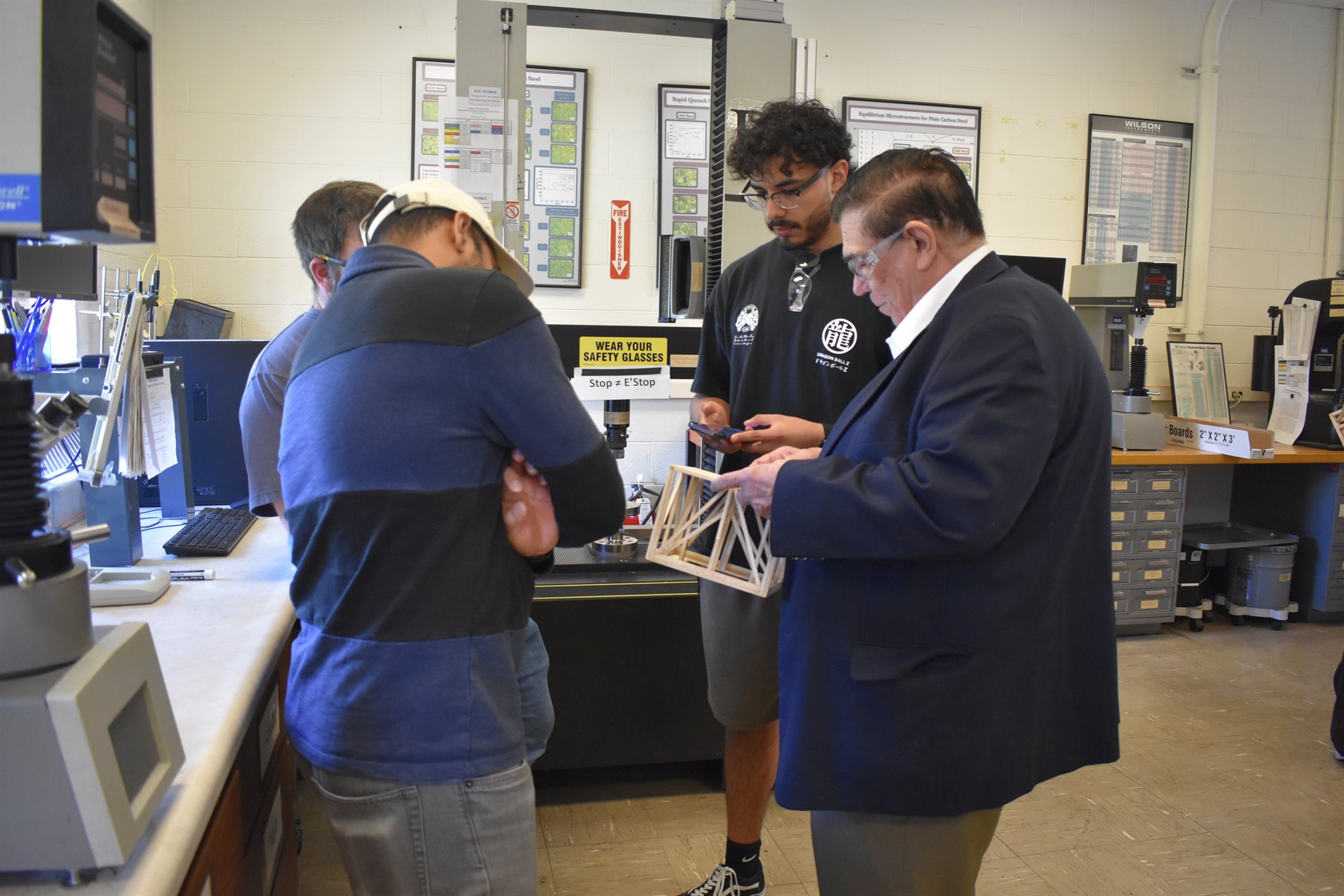
His work asked a simple but profound question: How do we understand failure before it happens?
In an interview about potholes, Reis explained how asphalt ages and cracks under temperature swings and traffic, and how “rejuvenators” might help restore flexibility and extend pavement life. The goal wasn’t just patching holes. It was preserving infrastructure and stewarding what we already have.
That philosophy defined his career. In 2023, Reis received the Robert C. McMaster Gold Medal Award from the American Society for Nondestructive Testing, one of the highest honors in his field. The award recognized not only technical innovation but service and educational leadership. Reis was among the first in the United States to introduce an undergraduate course in NDT&E, ensuring future engineers would think about inspection and monitoring alongside design.
But awards only tell part of the story.
Students remember the jingling change in his pocket — enough, it seemed, to pay for parking for half the lab. They remember his teasing greeting: “Ahhhh, Freshmen is here!” They remember the infamous pop quizzes, including the question that left generations second-guessing themselves: “What color is Professor Reis’ red tie?”
They remember the grin.

They also remember something quieter. One former Ph.D. student recalls a time of uncertainty, when his wife lost her advisor. Reis stepped in immediately — securing a teaching assistantship, supporting her immigration process, even contacting a congressional office on her behalf. It was mentorship that extended far beyond the lab.
And always, the refrain: “Never stop learning.”
That phrase wasn’t motivational fluff. It was an instruction. Reis taught students to observe carefully, to troubleshoot before asking for help, to understand materials the way a physician understands tissue — without breaking what they were trying to diagnose.
As he retires, his technical contributions to infrastructure safety and materials evaluation will endure. So will the lab he built, the course he pioneered and the standards he elevated.
But somewhere, in a lab late at night, a student is still working. And perhaps, just for a moment, wondering if the door might open — and a familiar voice might say:
“Good to see you. Just checking.”
The Department of Industrial and Enterprise Systems Engineering would like to thank Henrique for his dedication and commitment to the department and the generations of engineers that he mentored and challenged.